eSIM for Montenegro and Serbia: why EU roaming does not cover them (2026)
11/5/2026
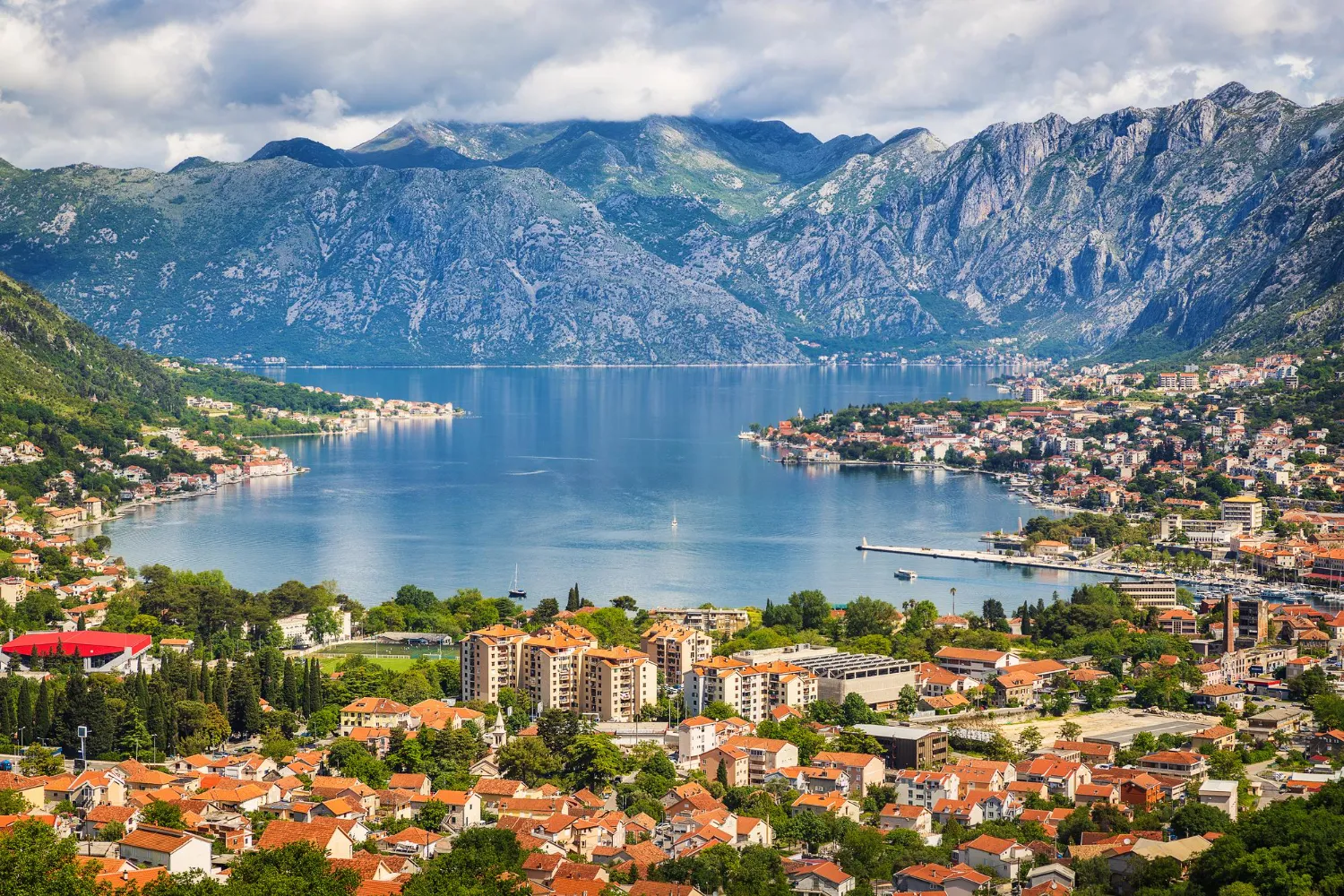
Montenegro and Serbia are close to the EU, easy to reach and popular with European travellers. However, there is one detail that regularly catches visitors by surprise: standard EU roaming does not cover either country in 2026.
You might land in Tivat, open your map to find the road to Kotor and discover that your home operator wants an alarming amount of money for a small amount of data. Or perhaps you cross from Hungary into Serbia while streaming music, unaware that your phone has just left its comfortable EU roaming zone.
A travel eSIM can make the change much simpler. This guide explains why EU roaming stops at the border, what connectivity is like in Montenegro and Serbia, and how to prepare your phone before leaving home.
Why EU roaming does not cover Montenegro or Serbia
The EU’s “Roam Like at Home” rules allow customers of EU operators to use calls, messages and mobile data in the 27 EU countries without normal roaming surcharges, subject to fair-use limits. The system also covers the EEA countries Iceland, Liechtenstein and Norway. Since 1 January 2026, it has included Moldova and Ukraine as well.
Montenegro and Serbia are not EU or EEA members, so operators are not legally required to include them. Montenegro’s use of the euro does not change this. Your wallet may feel at home, but your SIM does not.
The EU has started the process of potentially extending Roam Like at Home to the Western Balkans. On 4 June 2026, the Council of the EU authorised negotiations with six regional partners, including Montenegro and Serbia. However, negotiations are not the same as coverage: as of November 2026, neither country is part of the EU roaming area. You can read the current position in the European Commission’s roaming guidance.
UK travellers have an additional complication. EU roaming is no longer guaranteed for UK contracts, although some operators still include certain European destinations. Montenegro and Serbia are usually treated as non-EU or worldwide destinations. Ofcom recommends checking your provider’s charges and available packages before travelling.
How expensive is home-operator roaming?
There is no single price because every operator, contract and prepaid tariff is different. Some providers offer a daily pass, others sell a fixed data bundle, and a few include one or both countries in premium plans.
As a broad 2026 guide, examples from European and UK operators range from approximately €5 or £5 per day to around €15–€50 for larger passes or monthly add-ons. The allowance may be your normal domestic data, a few gigabytes or as little as 1 GB per day. Using data without a package can be considerably more expensive.
These ranges are only examples, not a quote for your contract. Check your operator’s country list, allowance, activation rules and renewal conditions before departure. Do not assume that a package called “Europe” includes every country geographically located in Europe.
| Option | Advantages | Things to check |
|---|---|---|
| Home-operator roaming pass | Keeps everything on one SIM and bill | Daily cost, data limit and whether both countries are included |
| Travel eSIM | Can be installed before departure and used alongside your home SIM | Phone compatibility, coverage area and plan validity |
| Local prepaid SIM | Often offers generous local data | Registration, shop opening hours and replacing or removing your home SIM |
| Public Wi-Fi | Useful for occasional browsing | Speed, security and availability away from your accommodation |
Getting to Montenegro and Serbia from Europe
Flying to Montenegro
Montenegro has two main airports. Podgorica Airport is useful for the capital, Lake Skadar and central Montenegro, while Tivat Airport is more convenient for the Bay of Kotor, Budva and much of the coast.
Tivat receives many seasonal and charter flights during the warmer months, including services from major UK and European cities. Podgorica has a broader mix of connections, and its network expanded considerably in 2026 with new routes to cities including Paris, Barcelona, Rome, Hamburg, Cologne, Basel, Bratislava and Vilnius. Current routes can be checked on the Airports of Montenegro website.
If your nearest airport has no suitable direct flight, a connection through Belgrade is a common option. Air Serbia operates between Belgrade and both Podgorica and Tivat. Connections through other regional hubs may also be available, but schedules change between summer and winter.
Flying to Serbia
Belgrade Nikola Tesla Airport is Serbia’s main gateway and has direct services to a wide range of European cities, including London, Paris, Amsterdam, Brussels, Rome, Vienna, Frankfurt, Berlin, Copenhagen and Stockholm. The airport reported 118 scheduled and charter destinations for the 2026 summer season. Niš is a smaller alternative with selected low-cost and regional routes.
Serbia is also practical to reach by car or coach from Hungary, Croatia, Romania, Bulgaria, Montenegro and other neighbouring countries. If you are travelling overland, change your mobile data settings before reaching the border rather than after your phone has already connected to a Serbian network.
When is the best time to visit?
For Montenegro, May, June, September and early October offer a pleasant balance of warm weather and lighter crowds. July and August are busiest on the coast, while inland areas and the mountains can provide a cooler escape. The official Montenegro tourism website recommends May to October for many outdoor activities.
Serbia works well as a year-round destination. Spring and autumn are particularly comfortable for Belgrade sightseeing, Novi Sad, national parks and road trips. Summer can be hot, especially in cities, while winter suits spa breaks, festive visits and mountain trips. Serbia’s tourism organisation describes spring and autumn as ideal for nature and sightseeing.
Mobile networks and the Wi-Fi reality
Montenegro has three main mobile operators: Crnogorski Telekom, One Crna Gora and m:tel. Serbia’s three licensed mobile network operators are Telekom Srbija, generally branded as mts, Yettel and A1 Srbija. These operator lists are confirmed by the countries’ telecommunications authorities.
Coverage is generally practical in cities, larger towns and popular coastal resorts. The experience can become less predictable on mountain roads, inside deep valleys, on remote hiking routes or in old buildings with very thick walls. Montenegro’s dramatic landscape is excellent for photographs and occasionally less excellent for radio signals.
Hotels, apartments, cafés and restaurants commonly provide Wi-Fi, especially in Belgrade, Novi Sad, Podgorica, Budva, Kotor and other tourist centres. Quality varies. A stylish apartment can still have a router hidden behind a television from another decade, and public Wi-Fi may slow down when every guest begins uploading sunset videos.
Use accommodation Wi-Fi for large downloads, backups and software updates, but keep mobile data available for navigation, transport apps, translation and messages. On an unfamiliar public network, avoid sensitive activity unless you trust the connection. The SimAbove VPN guide explains how a VPN can add protection while travelling.
Money and card payments
Montenegro uses the euro, despite not being an EU member. Cards are accepted in most hotels, restaurants, shops, bars and petrol stations, and ATMs are available in cities. Nevertheless, carry some cash for small cafés, market stalls, local transport, parking or businesses with a temporary card-terminal problem.
Serbia uses the Serbian dinar, or RSD. Major cards are widely accepted in cities and tourist businesses, while cash remains useful for smaller purchases and rural stops. Exchange money through banks or official exchange offices rather than informal street dealers. When an ATM or card terminal offers to convert the payment into your home currency, check the rate before accepting; paying in the local currency is often clearer.
Entry rules for EU and UK travellers
EU citizens do not need a visa for a normal tourist trip to Montenegro. According to the Government of Montenegro, EU citizens can stay for up to 30 days using a valid national identity card or up to 90 days using a valid passport. Accommodation providers normally register guests, but if you stay in private accommodation, confirm that your registration has been completed.
EU citizens can enter Serbia with a valid identity card and stay for up to 90 days, according to the National Tourism Organisation of Serbia. Check the Serbian Ministry of Foreign Affairs visa tool for rules applying to your nationality and documents.
British citizens can generally visit Montenegro for up to 90 days in a 180-day period and Serbia for up to 90 days within six months without a visa. Passport-validity rules apply, so UK travellers should check the current official foreign travel advice before booking.
How to set up your travel eSIM
- Check that your phone supports eSIM and is network-unlocked. Compatibility is determined by the exact device model, not simply the brand.
- Choose the correct coverage. A Montenegro plan will not automatically work in Serbia. If visiting both, select separate plans or a regional product that explicitly lists both countries.
- Install the eSIM at home over reliable Wi-Fi. Do not wait until you are standing beside an airport luggage carousel with one bar of public Wi-Fi and 3% battery.
- Label the lines clearly. Names such as “Home” and “Balkans data” make the settings easier to understand.
- Keep your home SIM active for calls and SMS. This lets you receive verification messages, although answering calls or sending messages may still trigger your operator’s roaming charges.
- Turn off data roaming for your home SIM. Also disable automatic mobile-data switching so the phone cannot quietly return to the expensive line.
- Turn on data roaming for the travel eSIM. Travel eSIMs usually need this setting because they connect through partner networks.
- Select the eSIM for mobile data. You can do this shortly before take-off and then enable airplane mode, or switch the data line after arrival. When you land, turn off airplane mode and allow a few minutes for network registration.
If Montenegro is your destination, you can view current plan details on the SimAbove Montenegro eSIM page. Prices and allowances can change, so the destination page is the right place to check the latest options rather than relying on an old screenshot.
How much data should you buy?
For maps, messaging, email and occasional browsing, a modest plan may be sufficient. Social video, cloud photo backups, video calls and hotspot use consume data much faster. Download offline maps, entertainment and important documents before leaving home.
If you are unsure, use the SimAbove eSIM Data Calculator to estimate your needs. It is usually better to choose a realistic allowance than to spend the holiday treating every short video like a dangerous financial decision.
Frequently asked questions
Does EU roaming work in Montenegro in 2026?
No. Montenegro is outside the EU and EEA roaming area. Your operator may offer a separate pass, but inclusion is voluntary.
Does EU roaming work in Serbia in 2026?
No. Serbia is not covered by EU Roam Like at Home. Check your contract or use a suitable travel eSIM, roaming package or local SIM.
Can one eSIM cover both Montenegro and Serbia?
Yes, if the plan explicitly lists both countries. A country-specific Montenegro eSIM should not be assumed to work after you cross into Serbia.
Should I remove my normal SIM?
Usually not. On a dual-SIM phone, keep it active for calls and SMS, but disable its data roaming and automatic data switching.
Can I rely only on hotel and café Wi-Fi?
You can for light use, but it is less convenient for maps, border crossings, transport changes and day trips. Mobile data provides a useful backup when the Wi-Fi password is unavailable—or apparently known only to one waiter who has gone on lunch.